
How AI is Transforming Workforce & Attendance Management
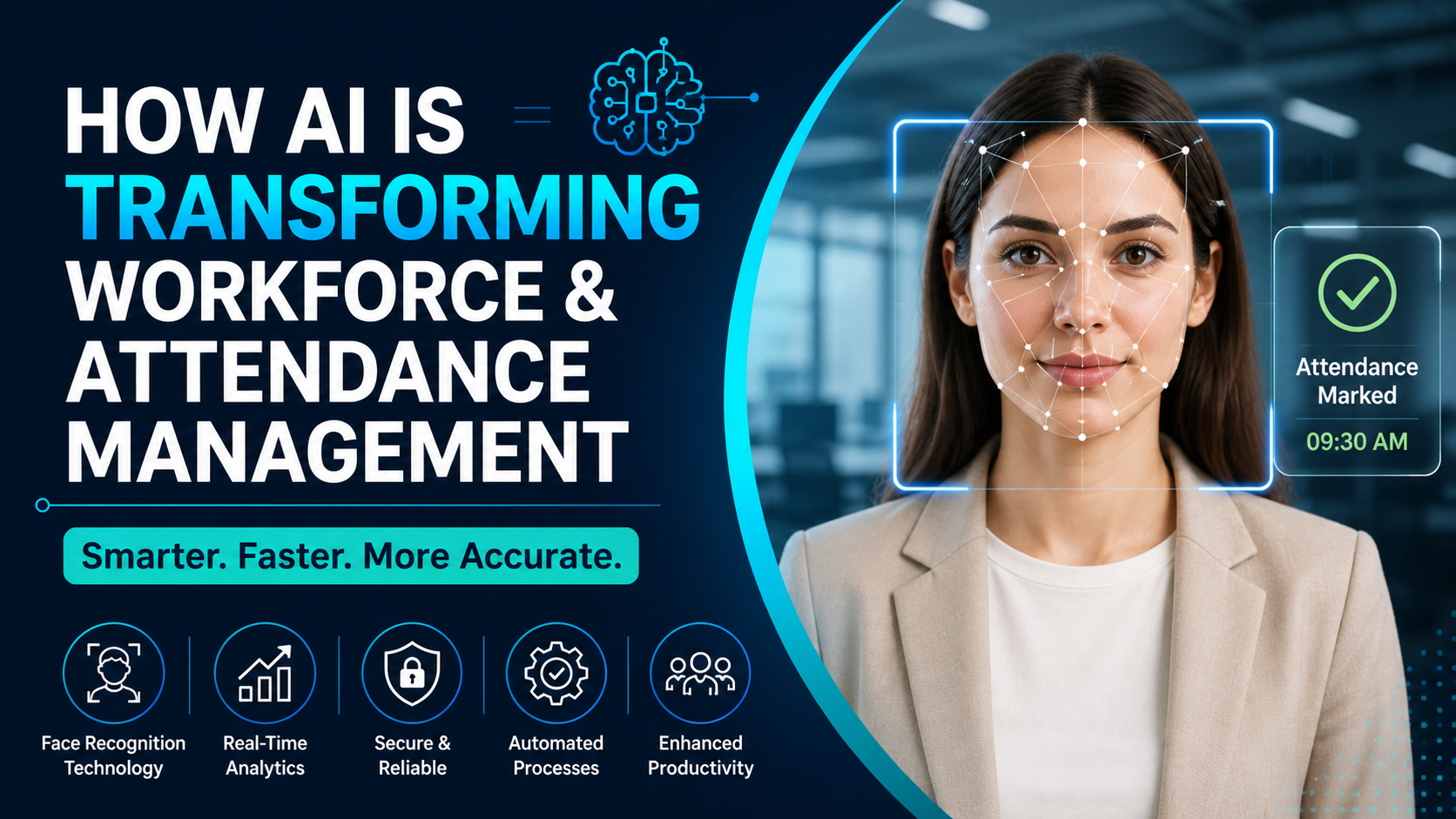
The Growing Role of AI in Workforce Management
Artificial intelligence is no longer limited to large enterprises or experimental use cases. It is now a core component of modern workforce management systems, enabling businesses to automate repetitive tasks, analyze employee behavior patterns, and make data-driven decisions.
Organizations are increasingly leveraging AI and machine learning solutions to automate HR workflows, improve shift scheduling, and anticipate future staffing demands. These systems can analyze historical attendance data, identify trends, and even forecast absenteeism, allowing managers to proactively address potential disruptions.
Beyond automation, AI also enhances decision-making. For example, businesses can use AI-driven insights to allocate resources more efficiently, monitor employee productivity, and improve overall operational performance. This shift from manual processes to intelligent systems is helping organizations save time, reduce errors, and focus on strategic growth.
Challenges with Traditional Attendance Systems
Despite technological advancements, many organizations still rely on outdated attendance tracking methods such as manual registers, swipe cards, or basic biometric systems. These methods come with several limitations:
- Proxy attendance and buddy punching
- Manual errors in data entry
- Lack of real-time visibility
- Time-consuming reporting processes
- Limited integration with payroll and HR systems
Such inefficiencies not only lead to inaccurate attendance records but also result in financial losses due to time theft and administrative overhead. Moreover, traditional systems fail to provide actionable insights, making it difficult for organizations to improve workforce efficiency.
The Rise of Face Recognition in Attendance Systems
One of the most impactful innovations in attendance management is the adoption of face recognition technology. Unlike traditional methods, face recognition offers a contactless, secure, and highly accurate way to track attendance.
Modern organizations are now implementing a face recognition attendance system to eliminate common issues like proxy attendance and manual errors. These systems use advanced AI algorithms to identify individuals in real time, ensuring that attendance records are both accurate and tamper-proof.
Key advantages of face recognition-based attendance include:
- Contactless operation, ideal for hygiene and safety
- High accuracy with minimal human intervention
- Real-time tracking and instant reporting
- Seamless integration with HR and payroll systems
- Enhanced security with identity verification
Additionally, these systems can work across multiple locations, making them ideal for organizations with distributed teams, educational institutions, and large enterprises. By automating attendance tracking, businesses can significantly reduce administrative workload while improving data reliability.
Benefits for Businesses and Institutions
The integration of AI and face recognition technology into workforce management delivers measurable benefits across industries.
1. Improved Accuracy and Transparency
AI-powered systems eliminate manual errors and ensure that attendance data is precise and reliable. This transparency builds trust among employees and management.
2. Increased Productivity
By automating routine tasks such as attendance tracking and reporting, organizations can free up valuable time for employees to focus on more meaningful work.
3. Cost Reduction
Reducing time theft, minimizing administrative overhead, and optimizing workforce allocation can lead to significant cost savings.
4. Real-Time Insights
AI systems provide actionable insights through dashboards and analytics, helping managers make informed decisions quickly.
5. Enhanced Security
Face recognition adds an extra layer of security by ensuring that only authorized individuals are marked present, reducing the risk of fraud.
The Future of AI in Workforce & Attendance Management
As AI technology continues to evolve, its role in workforce management will become even more advanced. Future systems are expected to incorporate features such as:
- Behavioral analytics to understand employee engagement
- Predictive workforce planning based on historical data
- Integration with smart workplace ecosystems
- Voice and emotion recognition for deeper insights
- Automated compliance and reporting
These innovations will not only improve operational efficiency but also create smarter, more adaptive workplaces. Organizations that adopt AI-driven systems early will gain a significant competitive advantage in managing their workforce effectively.
Conclusion
AI is fundamentally transforming workforce and attendance management by replacing outdated processes with intelligent, automated solutions. From predictive analytics to face recognition technology, modern systems are enabling organizations to achieve higher accuracy, efficiency, and security.
As businesses continue to scale and adapt to changing work environments, investing in AI-powered solutions is no longer optional, it’s essential. By embracing these technologies, organizations can streamline operations, reduce costs, and build a more productive and future-ready workforce.