How Super Apps Are Reshaping the Future of Mobile Technology
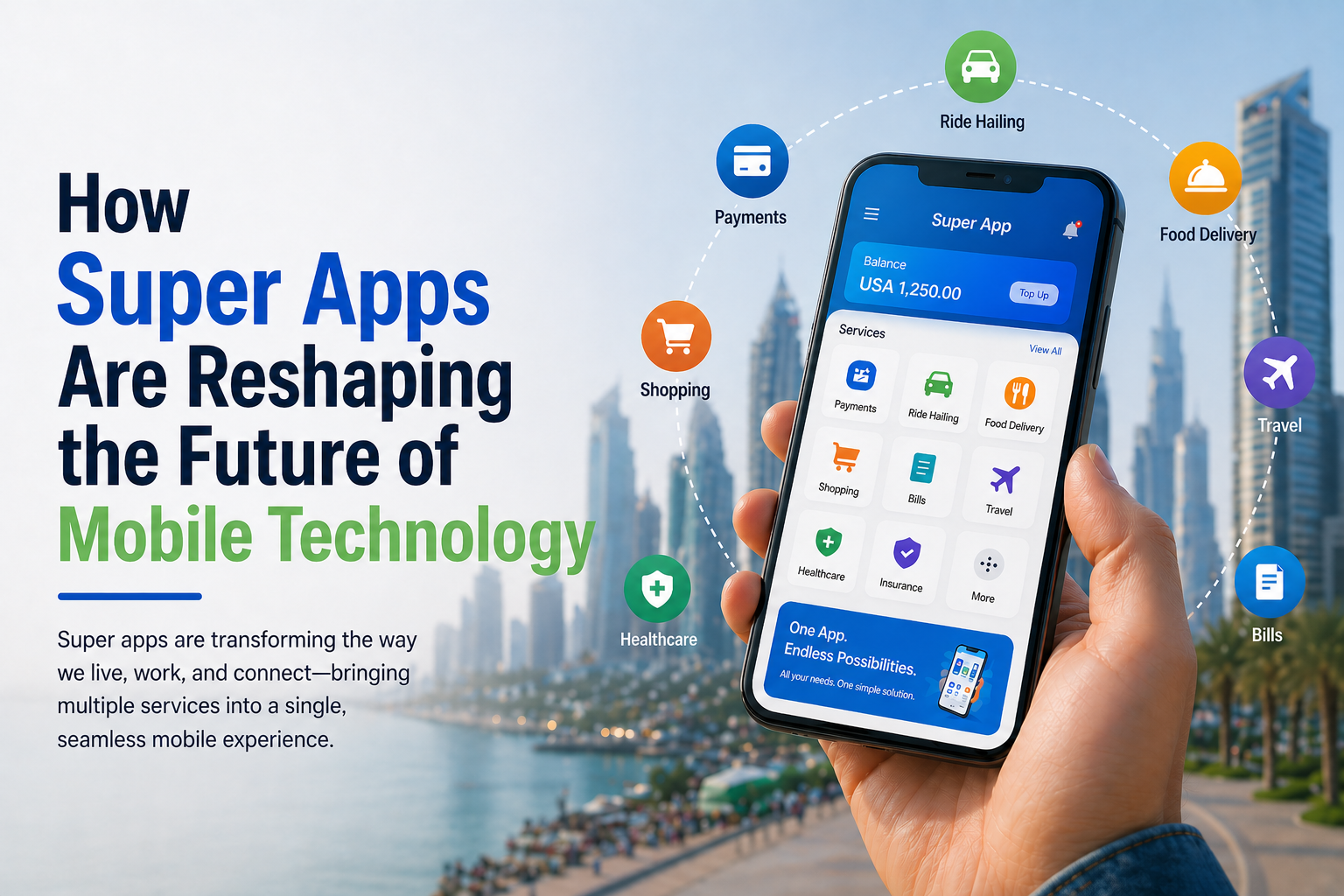
A super app is a single application that offers multiple functions to its users, including messaging, shopping, payment, transportation reservation, food delivery, and other services. User expectations have increased, and as a result, businesses are opting to make applications using a mobile app development company to keep users engaged in one digital space.
Super apps are no longer the future, but the present itself, and a massive transforming effect upon the way people interact with technology in workplaces, homes, or on the go.
What Is a Super App?
A super app is a mobile application that bundles all the services into one platform, which users can access. The application gives users access to all of the services together instead of having to install multiple applications for banking, transportation, communication, and shopping.
Some well-known examples include:
- Grab
- Gojek
These applications started with a single core feature and, over time, have evolved to full-fledged digital ecosystems.
Why Super Apps Are Becoming So Popular?
The rise of super apps is closely connected to changing user behavior. People now prefer convenience over managing multiple separate apps.
Here are some major reasons behind their popularity:
1. Convenience
Users can perform multiple tasks without leaving one application.
2. Better User Experience
A single platform creates a smoother and more connected digital experience.
3. Higher User Engagement
Businesses keep users inside their ecosystem for longer periods.
4. Simplified Payments
Integrated wallets and payment systems reduce friction during transactions.
Industries Being Transformed by Super Apps
Super apps are reshaping multiple industries at once.
1. Finance and Digital Payments
Many super apps now include:
- mobile banking
- digital wallets
- peer-to-peer transfers
- investment tools
This makes financial services faster and more accessible.
2. E-Commerce
Users can browse products, compare prices, and complete purchases without switching platforms.
Apps like WeChat integrate shopping directly into the user experience.
3. Transportation and Delivery
Ride-hailing and food delivery services are now central features in many super apps.
Users can:
- book rides
- order groceries
- track deliveries
- pay instantly
all from one interface.
4. Communication and Social Networking
Messaging remains a core feature in many super apps because it keeps users highly engaged throughout the day.
How Super Apps Benefit Businesses
Businesses gain significant advantages by adopting the super app model.
1. Increased Customer Retention
The more services offered inside one app, the less likely users are to leave the platform.
2. More Revenue Opportunities
Companies can monetize through:
- subscriptions
- ads
- transaction fees
- premium services
3. Better User Data Insights
Super apps collect valuable behavioral data that helps businesses personalize experiences.
Challenges of Building a Super App
Despite their benefits, super apps are complex to develop and maintain.
Some major challenges include:
- scalability issues
- data security concerns
- performance optimization
- user interface complexity
- regulatory compliance
Because these platforms handle large amounts of user data and transactions, security becomes extremely important.
Technology Behind Super Apps
Modern super apps rely on advanced technologies like:
- cloud computing
- artificial intelligence
- machine learning
- API integrations
- real-time analytics
These technologies help deliver seamless user experiences across multiple services.
Mobile App Development Cost for Super Apps
One important factor businesses must consider is the mobile app development cost associated with building a super app.
Since these platforms include multiple services and complex backend systems, development costs are significantly higher than standard applications.
Factors affecting cost include:
- number of features
- third-party integrations
- security requirements
- scalability needs
- platform compatibility
Building a fully functional super app often requires a long-term investment and continuous updates.
The Future of Super Apps
Mobile technology development now leads to integrated digital ecosystems as its main future direction. Users increasingly prefer apps that simplify daily tasks rather than managing multiple separate applications.
Future super applications will achieve greater levels of personalization and intelligence through upcoming technologies, which include artificial intelligence, blockchain, and predictive analytics.
Industries like healthcare, education, professional services, and entertainment are deploying Super-Apps on a much larger scale compared to the past decade.
Final Thoughts
Super applications transform mobile technology by combining multiple digital services into one completely integrated platform. They enable a higher level of convenience for users by allowing multiple people to interact with the system while providing an additional source of revenue for businesses.
The increasing worldwide adoption of mobile devices will lead to an essential need for super applications in common daily activities. The companies that successfully implement digital transformation will gain an advantage over their competitors in the rapidly evolving online market.