
AI-Powered Mobile Apps: Use Cases That Are Changing Industries
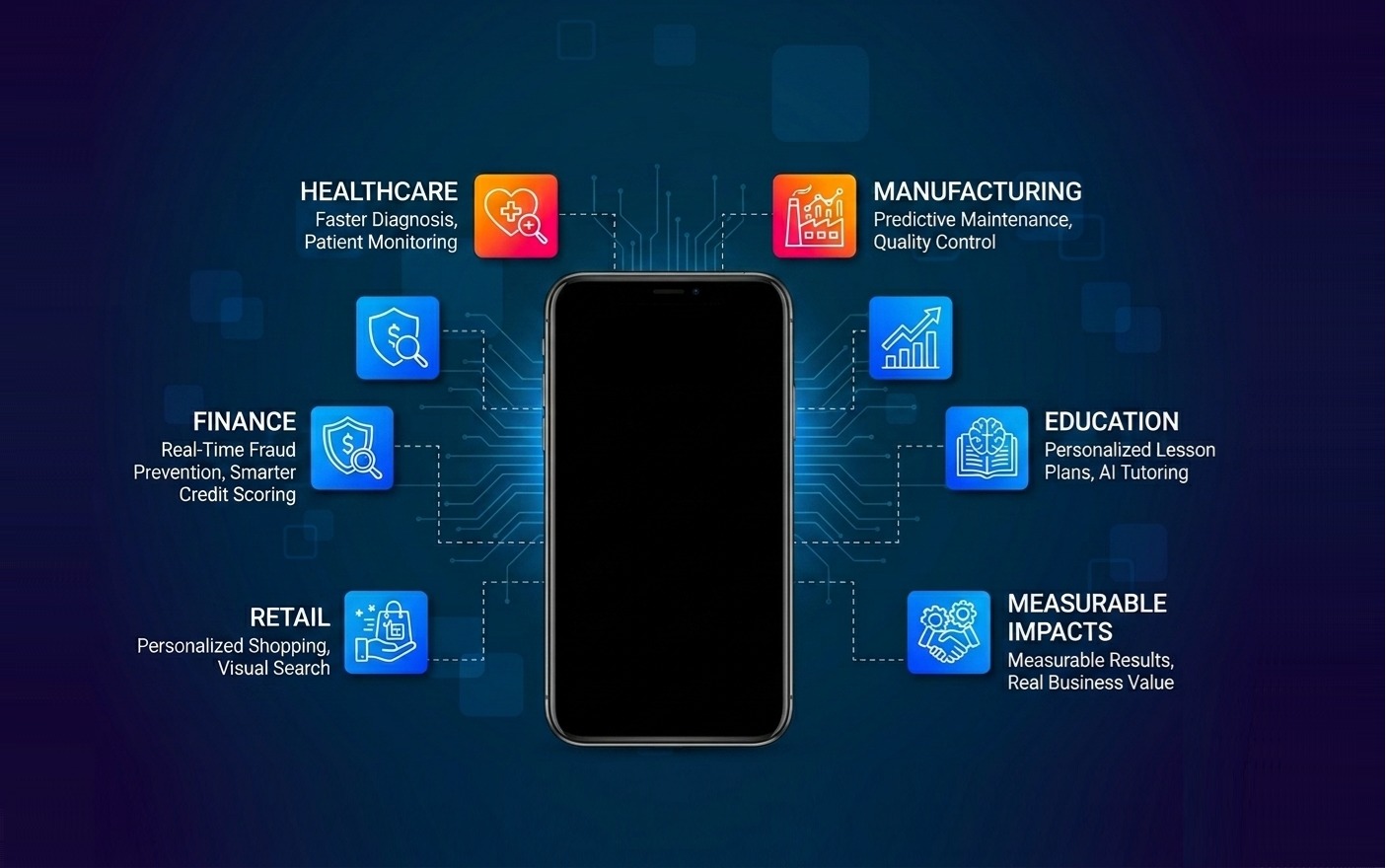
Some AI mobile apps are solving real business problems. They are helping hospitals detect health issues faster, reducing fraud in banking apps, improving shopping recommendations, and even predicting machine failures before factories lose money. Businesses are investing heavily because the results are measurable, not just flashy.
The bigger question is this: which AI app use cases are actually changing industries, and which ones are just expensive experiments?
Let’s break it down.
What Makes an AI-Powered Mobile App Different?
A normal mobile app follows instructions. An AI-powered app learns from user behavior, analyzes data, and improves responses over time.
Think about the difference between:
- A regular fitness app that tracks steps
- An AI fitness app that notices your sleep patterns, workout habits, and recovery time to suggest better routines
That’s the shift.
Modern AI mobile apps use technologies like:
- Machine Learning (ML)
- Natural Language Processing (NLP)
- Predictive Analytics
- Computer Vision
- Generative AI
These technologies help apps become smarter instead of simply reactive.
Healthcare Apps Are Moving from Reactive to Predictive
Healthcare is probably the clearest example of AI working in the real world.
AI-powered healthcare apps now assist with:
- Symptom checking
- Remote patient monitoring
- Medical image analysis
- Appointment scheduling
- Personalized treatment reminders
Some apps can even detect warning signs before symptoms become severe. AI tools are already helping with lung disease screening and clinical documentation.
Key Benefits in Healthcare
- Faster diagnosis support
- Reduced paperwork for doctors
- Better patient engagement
- 24/7 virtual health assistance
- Early disease detection
But this industry also shows AI’s biggest problem: trust.
Reuters recently reported concerns from doctors about AI medical apps giving misleading advice to patients.
That’s why healthcare still needs human oversight. AI can assist doctors, but replacing them completely? That’s nowhere close.
AI in Finance Is Fighting Fraud Faster Than Humans
Banks and fintech companies love AI because money moves fast, and fraud moves even faster.
AI-powered finance apps analyze huge amounts of transaction data in real time. Instead of waiting for suspicious activity reports, AI systems flag unusual behavior instantly.
Common AI finance app features include:
- Fraud detection
- AI chatbots for customer support
- Smart budgeting tools
- Automated investment suggestions
- Credit scoring analysis
AI systems can spot patterns that humans would probably miss after staring at spreadsheets for eight hours.
Why Financial Apps Use AI
- Faster fraud prevention
- Better customer support
- Personalized banking experiences
- Smarter financial predictions
- Reduced operational costs
Still, there’s skepticism here too. AI can make decisions quickly, but if the training data is biased or incomplete, mistakes happen. That’s a real concern when loans or financial approvals are involved.
Retail Apps Are Learning What Customers Want Before They Search
Retail apps have become surprisingly good at predicting shopping behavior.
You browse one pair of shoes, and suddenly your app recommends matching outfits, similar brands, and discounts you somehow wanted before you even searched.
That’s AI-driven personalization.
Retail mobile apps now use AI for:
- Product recommendations
- Visual search
- Inventory forecasting
- Dynamic pricing
- Customer behavior analysis
Big eCommerce platforms rely heavily on recommendation engines because personalized shopping increases sales.
Main Advantages for Retail Brands
- Higher customer engagement
- Better product discovery
- Improved conversion rates
- Smarter inventory management
- Personalized shopping experiences
Of course, some users find this creepy rather than helpful. When an app knows your shopping habits too well, personalization can start feeling invasive.
Manufacturing Apps Are Preventing Expensive Downtime
Factories are not usually the first thing people think about when discussing AI mobile apps, but manufacturing may quietly benefit the most.
AI-powered manufacturing apps help companies monitor machines in real time. Instead of waiting for equipment to fail, predictive maintenance systems warn teams early.
That means fewer production delays and lower repair costs.
Common Manufacturing AI Use Cases
- Predictive maintenance
- Quality inspection using computer vision
- Supply chain optimization
- Production forecasting
- Automated safety monitoring
Why Manufacturers Care About AI
- Reduced downtime
- Lower maintenance costs
- Faster production cycles
- Better quality control
- Improved workplace safety
This is one area where AI feels less like marketing hype and more like practical business logic.
Education Apps Are Becoming More Personalized
Education apps are shifting away from one-size-fits-all learning.
AI-powered learning platforms can adjust lessons based on student progress, learning speed, and weak areas.
Language apps, tutoring apps, and test preparation platforms already use AI heavily.
AI Features in Education Apps
- Personalized lesson plans
- AI tutoring assistants
- Automated grading
- Real-time feedback
- Speech recognition for language learning
Benefits for Students and Teachers
- Customized learning experiences
- Faster feedback
- Better student engagement
- Reduced administrative work
- Flexible learning support
Still, AI cannot replace good teachers. It works better as a support tool than a substitute for human interaction.
The Real Challenge: Useful AI vs. AI Hype
Here’s the uncomfortable truth.
Many businesses want AI-powered apps because competitors are doing it, not because they actually need it.
Adding AI to an app does not automatically improve the user experience. Sometimes it creates unnecessary complexity.
The companies getting real value from AI are focusing on specific problems:
- Reducing fraud
- Improving customer support
- Predicting failures
- Personalizing experiences
- Automating repetitive tasks
That’s where AI works best.
An experienced AI App Development Company usually focuses on solving business problems first instead of adding AI features just for marketing.
Final Thoughts
AI-powered mobile apps are definitely changing industries, but not always in the dramatic way headlines suggest.
The biggest impact often comes from small improvements that save time, reduce errors, or improve decision-making behind the scenes.
Healthcare apps are improving patient monitoring. Finance apps are detecting fraud faster. Retail apps are personalizing shopping experiences. Manufacturing apps are preventing downtime. Education apps are adapting to individual learning styles.
That’s real progress.
But skepticism still matters.
AI is powerful, but it’s not magic. The best AI mobile apps are the ones that quietly solve real problems instead of constantly reminding users that they are “AI-powered.”