
AT&T Takes California to Court Over Copper Landline Rules Amid Push for Network Modernization
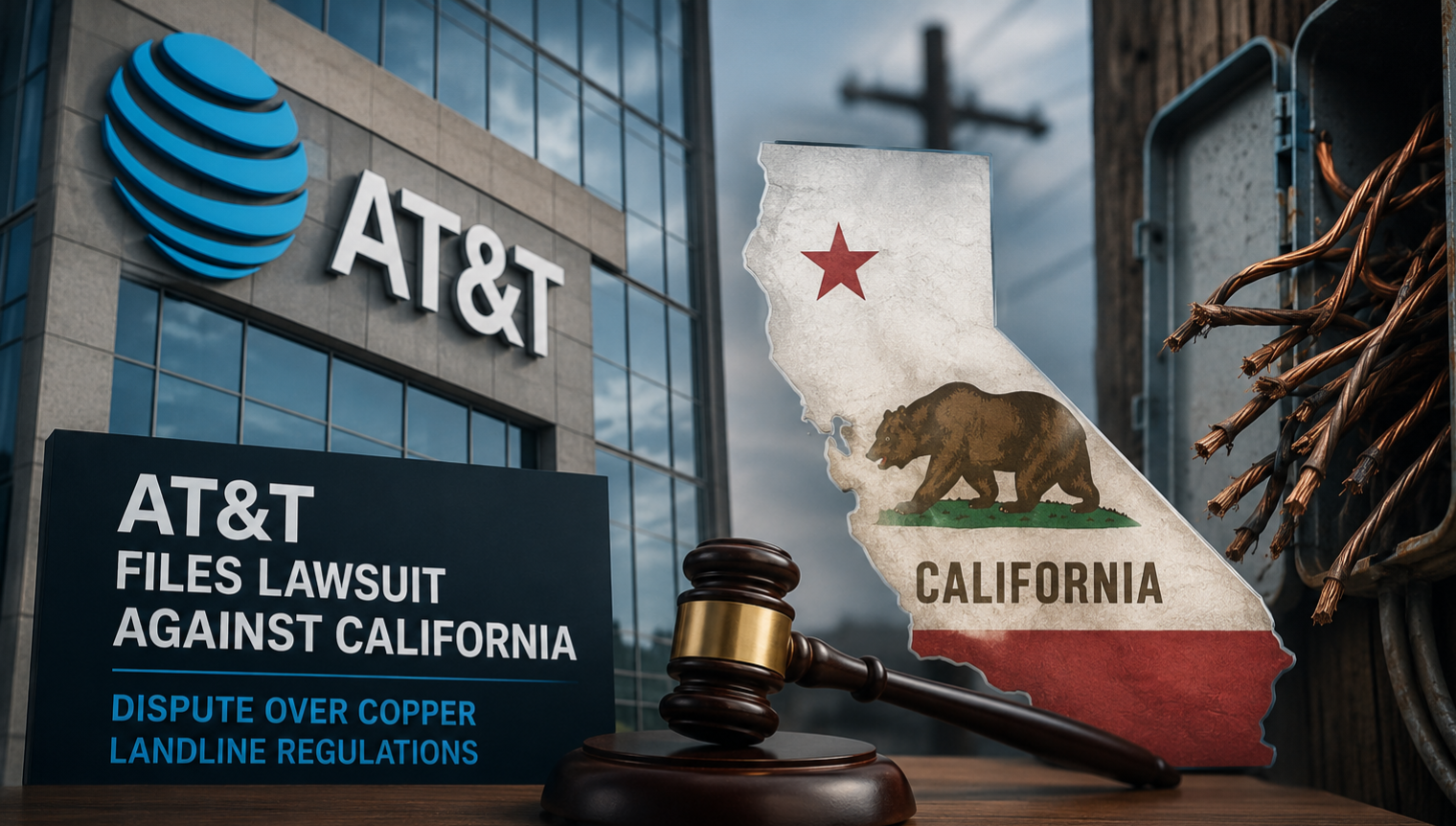
AT&T has launched a legal challenge against California regulators as it seeks to accelerate the retirement of its aging copper-based telephone network. The telecommunications giant argues that maintaining traditional landline infrastructure has become increasingly costly and impractical as consumers continue shifting toward wireless and internet-based communication services.
The lawsuit, filed in the U.S. District Court for the Southern District of California, names the California Public Utilities Commission (CPUC) and the state's attorney general as defendants. At the heart of the dispute is California's requirement that AT&T continue providing services as a Carrier of Last Resort (COLR), a designation that obligates telecommunications providers to offer basic phone service in designated areas.
According to AT&T, only about 3% of households in California still rely on copper landlines. Despite serving a small fraction of customers, the company claims it spends roughly $1 billion maintaining the legacy network. The provider argues that these resources could instead be directed toward expanding and modernizing newer communication technologies.
AT&T also highlighted growing challenges associated with copper infrastructure, including theft. Rising global copper prices have made network components attractive targets for criminals, increasing maintenance burdens and operational costs.
The company has asked the Federal Communications Commission (FCC) for approval to discontinue traditional phone services in locations where alternative technologies are available. AT&T contends that federal telecommunications policies should take precedence over California's regulations, which it believes are preventing a necessary transition away from outdated systems.
As part of its modernization strategy, AT&T plans to move customers toward internet-based phone services and wireless connectivity. However, the company has clarified that it does not intend to replace all copper networks with fiber-optic infrastructure. Instead, it favors a "wireless-first" approach in areas where mobile networks can adequately serve customers.
AT&T argues that phasing out copper networks could also produce environmental benefits. The company estimates that reducing dependence on legacy infrastructure could save approximately 300 million kilowatt-hours of electricity annually by 2030, helping lower carbon emissions associated with network operations.
California regulators, however, remain cautious. The CPUC has stated that its focus is on ensuring reliable communication services, whether delivered through fiber, wireless, or other technologies. State officials may also point to the resilience of traditional landlines, which often remain operational during power outages, wildfires, and disruptions affecting cellular networks.
The issue is particularly significant for rural communities and vulnerable populations that may have limited access to alternative services. AT&T's filings indicate that it is seeking permission to discontinue service for approximately 184,000 residential customers and 15,000 business customers across California.
The legal battle could have implications beyond the state. California is among several states that have resisted efforts to retire copper networks, setting the stage for a broader debate over whether state regulators or federal authorities should have the final say on the future of America's telecommunications infrastructure.
As communication technologies continue to evolve, the outcome of the case may influence how quickly legacy phone networks are phased out and what responsibilities providers must maintain for customers who still depend on traditional landline services.