
UK Greyhound Racing Company Enters Liquidation With Over £4 Million in Debt
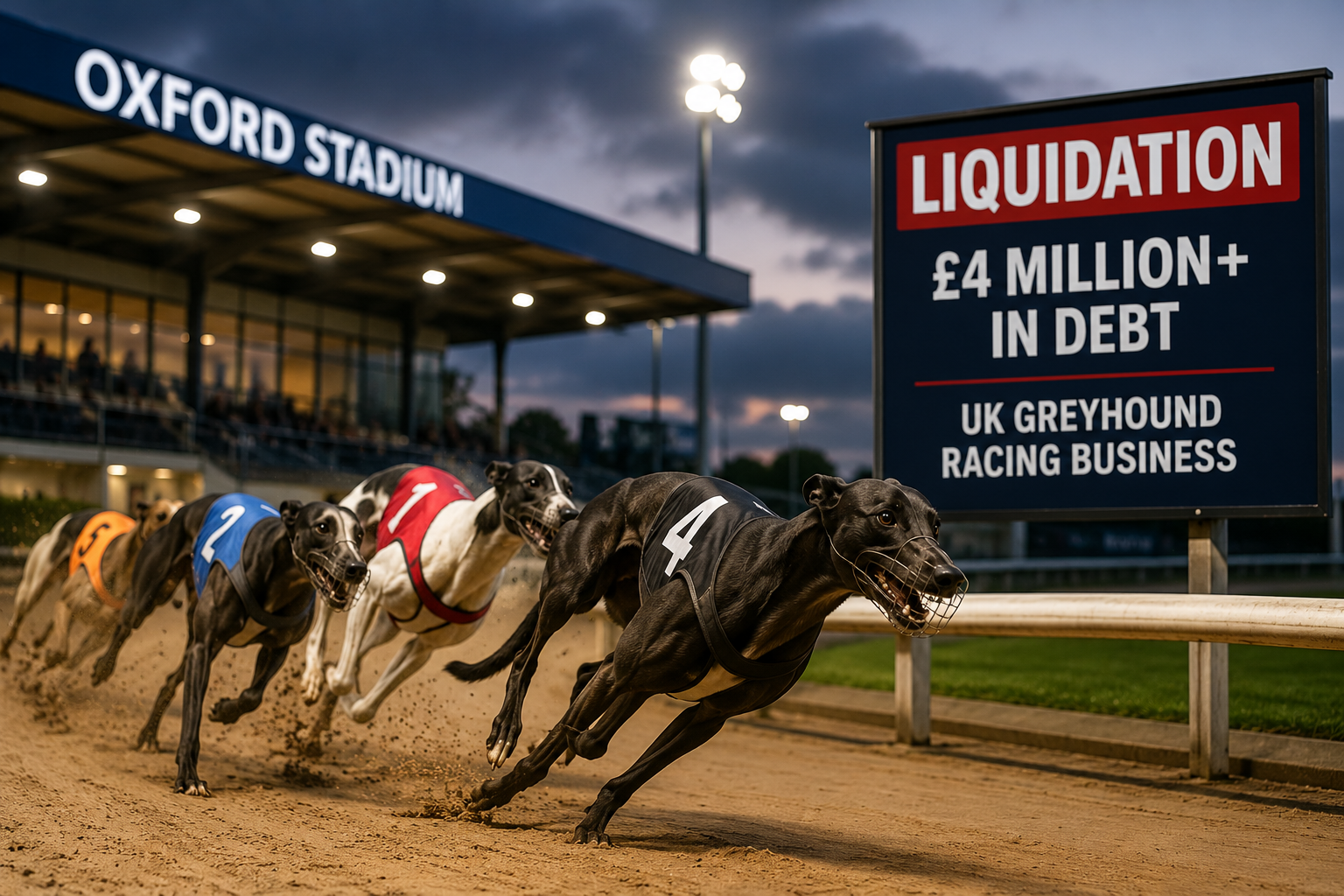
A major UK greyhound racing business has entered liquidation after accumulating more than £4 million in debt, highlighting the growing financial pressures facing Britain's greyhound racing industry. The collapse affects one of the operators behind Oxford Stadium, adding further uncertainty to a sport already experiencing declining revenues and increasing regulatory challenges.
Liquidation documents reveal that the company owes millions of pounds to creditors, including suppliers, tax authorities, and other businesses. The financial difficulties reportedly stem from rising operating costs, reduced commercial income, and ongoing challenges in maintaining profitable race meetings. The business had previously struggled to meet financial obligations while attempting to sustain racing operations.
Oxford Stadium reopened for greyhound racing in 2022 after years of closure, raising hopes of revitalizing the sport in the region. However, financial performance failed to meet expectations, and mounting debts ultimately pushed the operating company into liquidation. Earlier reports had already highlighted significant debt levels and concerns over delayed financial filings.
The development comes during a difficult period for the UK greyhound racing industry. Several race tracks have closed or reduced operations in recent years as operators face higher costs, declining betting revenues, and growing political scrutiny over animal welfare. In 2026, both Oxford and Suffolk Downs also lost key media rights agreements, further impacting revenue opportunities for racing operations.
Industry observers say the liquidation reflects broader structural challenges rather than an isolated business failure. Greyhound racing operators are increasingly dependent on betting partnerships, broadcasting agreements, and sponsorship revenue to remain financially viable. Any reduction in these income streams can quickly place significant pressure on smaller operators.
Despite the company's financial collapse, efforts are expected to continue to protect the welfare of racing greyhounds, while stakeholders assess the future of affected facilities and staff. Industry bodies are also monitoring the situation closely as they work to minimize disruption for trainers, owners, and employees connected to the business.
The liquidation adds to growing concerns about the long-term sustainability of greyhound racing in the UK, with operators facing increasing economic pressures alongside evolving regulatory and welfare expectations. As the industry continues to adapt, the future of several racing venues may depend on new investment models and stronger commercial partnerships.